Finance / July 23, 2026
How Much Does a Mobile Coffee Trailer Cost?
The trailer is only part of the investment. Here is the real cost to launch, what operators can earn, and how to estimate your payback period.
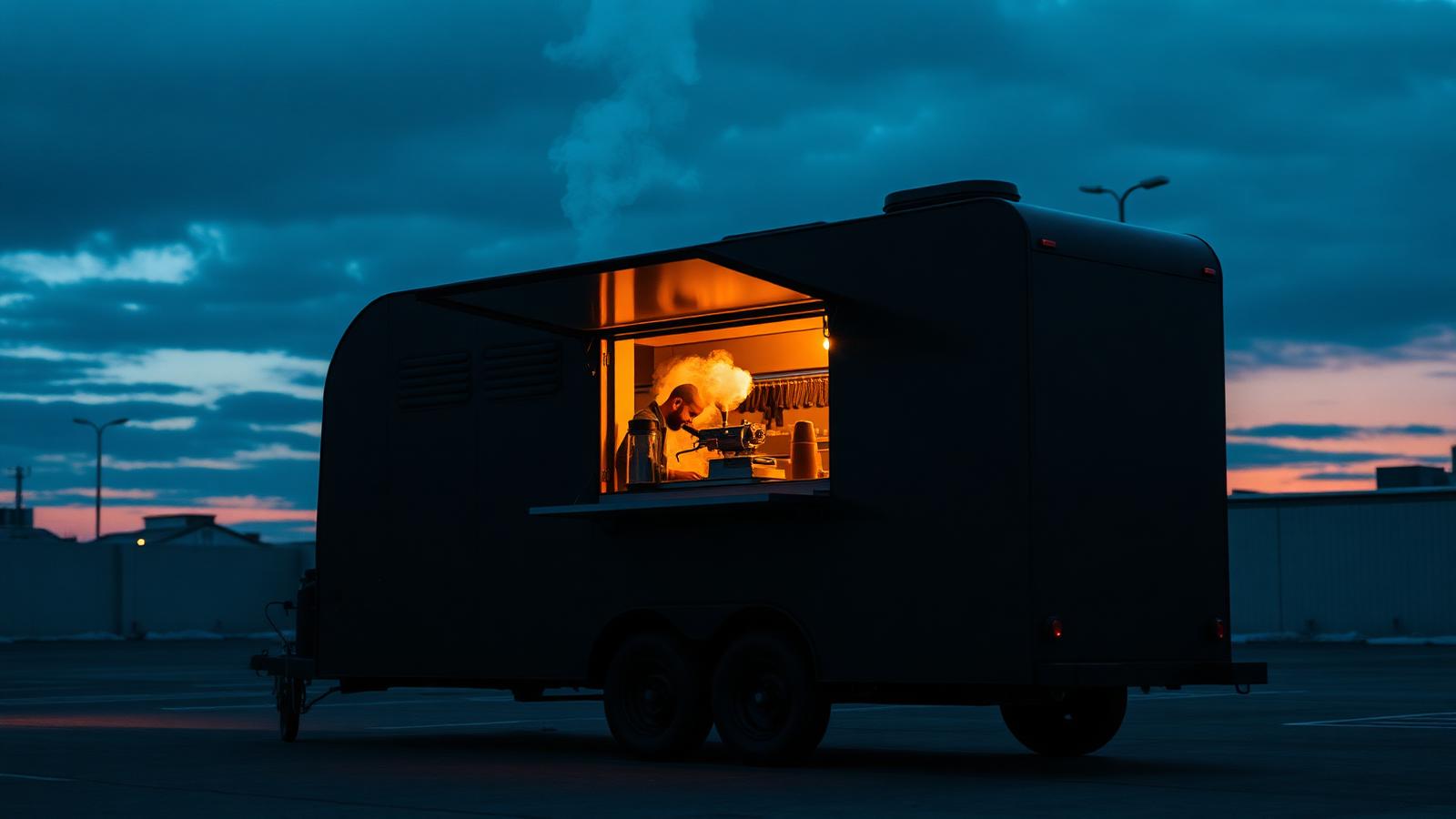
A realistic startup budget, break-even model, and ROI guide for anyone considering a mobile coffee business.
The trailer's advertised price is not the number that determines whether you can open. The number that matters is your all-in, ready-to-serve investment: trailer, buildout, brewing equipment, power, water, permits, insurance, initial inventory, branding, and enough working capital to survive a slow start.
That distinction is where many first-time operators get surprised. A low-cost shell can become expensive after plumbing, electrical upgrades, refrigeration, equipment installation, inspection corrections, and downtime. A professionally built trailer costs more upfront, but it can replace a pile of uncertain retrofit costs with a known operating platform.
Mobile Coffee Trailer Cost at a Glance
| Launch path | Planning range | What it usually means |
|---|---|---|
| Used or DIY build | $30,000–$60,000 | Best for experienced builders with time, local code knowledge, and tolerance for repairs or inspection changes. |
| New purpose-built launch | $85,000–$125,000 | A realistic all-in target for a commercial trailer, espresso package, permits, branding, opening inventory, and working capital. |
| Premium / high-volume | $125,000–$175,000+ | Higher-capacity equipment, upgraded finishes, climate control, off-grid power, solar, custom branding, and more reserve cash. |
These are planning ranges, not quotes. Your location, menu, production volume, health-code requirements, equipment choices, and whether you already own a suitable tow vehicle can move the total substantially.
Where the Money Actually Goes
A coffee trailer looks simple from the service window. Behind it is a compact commercial beverage operation that must make drinks quickly, protect food safety, handle peak electrical loads, carry and dispose of water, remain comfortable in bad weather, and pass inspection.
| Cost category | Typical range | What to watch |
|---|---|---|
| Trailer and commercial buildout | $40,000–$90,000+ | Shell, structure, insulation, washable surfaces, counters, cabinets, service window, plumbing, and electrical. Included features vary dramatically. |
| Commercial espresso machine | $5,000–$25,000 | Capacity, voltage, boiler size, serviceability, and brand drive price. High-volume machines cost more but reduce bottlenecks. |
| Commercial grinder(s) | $1,500–$8,000 | Many operators need a primary espresso grinder and a second grinder for decaf or another roast. |
| Water filtration / softening | $500–$2,000 | Protects taste and expensive boilers. Match the system to local water quality and machine requirements. |
| Refrigeration | $1,500–$4,000 | Undercounter refrigeration, milk storage, and cold-beverage capacity. May already be included in the trailer package. |
| Power system | $2,000–$8,000+ | Generator, shore power, wiring, and distribution. Battery and solar options can increase upfront cost but reduce noise and fuel use. |
| POS, smallwares, and safety | $1,000–$3,000 | Tablet, card reader, pitchers, tampers, knock box, thermometers, fire extinguisher, and backup service tools. |
| Branding and exterior graphics | $1,000–$5,000 | Logo application, partial graphics, or a full wrap. Your trailer is also your storefront and billboard. |
| Permits, plan review, and licenses | $500–$5,000+ | Highly local. Some jurisdictions are straightforward; others require multiple agencies, plan revisions, and recurring fees. |
| Opening inventory | $1,000–$5,000 | Beans, milk, alternative milks, syrups, cups, lids, cleaning products, pastries, and backup stock. |
| Insurance and business setup | $1,000–$3,000+ | General liability, trailer coverage, business registration, accounting setup, and initial professional fees. |
| Working capital | $10,000–$20,000 | Cash for payroll, fuel, site fees, commissary or storage, supplies, repairs, marketing, and slow weeks. |
| Tow vehicle, if needed | $20,000–$60,000+ | Often omitted from startup budgets. Verify towing capacity, payload, hitch requirements, braking, and insurance. |
Do not simply add every high number in the table. A quality base package may already include plumbing, refrigeration, power, counters, storage, and safety equipment. Compare quotes line by line and identify what is installed, what is merely “ready for,” and what you must still purchase.
The Four Costs Most Buyers Underestimate
1. Code compliance before construction
Health departments often require plan review before a mobile unit is built or remodeled. Requirements can cover sink configuration, fresh- and gray-water capacity, approved surfaces, hot water, food storage, commissary support, and where the unit may operate. Contact the agencies that will inspect you before the layout is final — not after the trailer is complete.
2. Power during the actual morning rush
An espresso machine, grinder, refrigerator, water heater, brewer, blender, lights, and climate equipment can create a large simultaneous load. Confirm startup loads and voltage requirements for the exact equipment package. If your chosen machine needs 208/240V service, that decision belongs in the build plan.
3. Working capital
A new operator can be busy and still run short of cash. Event deposits, inventory, payroll timing, repair surprises, weather cancellations, and slow route development all hit before the business feels stable. A trailer without reserve cash is not truly launch-ready.
4. The owner's time
Selling coffee is only part of the job. You will also tow, set up, clean, restock, maintain equipment, post your schedule, negotiate locations, book events, handle permits, manage bookkeeping, and plan around weather. Your financial model should include a fair wage for that work before it calls the remaining cash “profit.”
Are Mobile Coffee Trailers Profitable?
They can be. Demand is not the problem: the National Coffee Association reports that two-thirds of American adults drink coffee every day, averaging three cups per coffee drinker. The harder question is whether you can put your trailer in front of enough of those people, at the right time, with a fast menu and a repeatable schedule.
Coffee beverages can carry strong gross margins because ingredients are a relatively small share of the selling price. Gross margin, however, is not take-home profit. Labor, card fees, site or event fees, commissary and storage, fuel or electricity, insurance, waste, maintenance, marketing, loan payments, and taxes all come afterward.
For planning, a stabilized operating margin of roughly 10% to 20% is more responsible than assuming every drink's gross margin becomes profit. A disciplined owner-operated trailer with strong recurring locations may do better. A weak route, too much labor, high event fees, or heavy debt can do much worse.
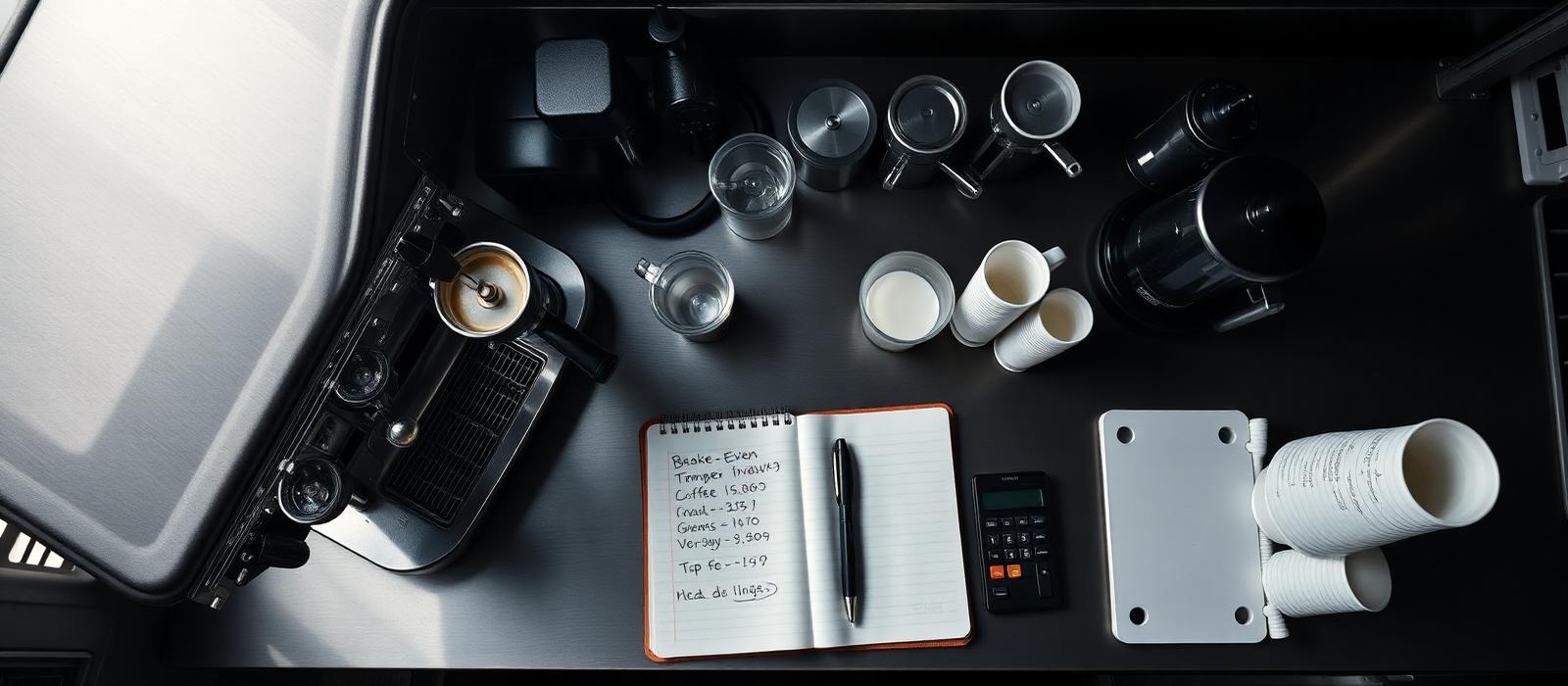
A Simple Break-Even Calculation
Use contribution margin — not the menu price — to calculate the daily sales target. Contribution margin is the money left from each ticket after ingredients, packaging, and transaction fees.
Example: assume an average ticket of $7.50, variable costs equal to 30% of sales, 22 operating days per month, and $8,000 in fixed monthly costs. The contribution per ticket is $5.25. Your break-even target is about 69 transactions per day.
The $8,000 fixed-cost figure should include a fair owner wage, any employee payroll, insurance, site or commissary costs, software, marketing, maintenance reserves, storage, and scheduled debt payments. If you leave your own pay out, the spreadsheet may show a “profit” while you are effectively working for free.
How Long Could It Take to Pay Off the Trailer?
There is no honest universal payback period. Location quality creates a much larger difference than the price of beans. The following model uses a $100,000 all-in startup investment and shows why daily transaction count matters so much.
| Scenario | Orders/day | Avg. ticket | Days/mo. | Monthly sales | Illustrative margin / payback |
|---|---|---|---|---|---|
| Validation phase | 60 | $7.00 | 20 | $8,400 | 0%–8% / no reliable payback |
| Established route | 100 | $7.50 | 22 | $16,500 | 15% / about 40 months |
| Strong route + events | 150 | $8.00 | 24 | $28,800 | 20% / about 17 months |
This illustration is not a forecast or guarantee. “Operating margin” must be defined consistently and should account for a fair owner wage. Taxes, financing structure, seasonality, unexpected repairs, and expansion spending can extend the payback period.
A strong operator with recurring weekday locations and profitable event work may recover the initial investment in roughly 18 to 36 months. A healthy but slower ramp may take three to five years. A trailer without reliable locations may never produce an acceptable return, regardless of how inexpensive it was to build.
What Makes the Economics Work
Sell a route, not a roaming idea
The best location is not merely busy; it is repeatable. Office parks, factories, hospitals, colleges, apartment communities, dealerships, gyms, and commuter locations can create dependable morning demand. Secure written permission and test traffic patterns before building your forecast.
Build around the rush
A long menu can feel ambitious and still be bad business. Design for fast, popular drinks; keep ingredients cross-functional; stage cups and milk efficiently; and make the service window, refrigerator, grinders, sink, and POS work as one production line.
Use events as a second revenue engine
Weddings, corporate events, festivals, private parties, and employee-appreciation days can produce larger tickets and deposits. They also reduce dependence on one daily parking location. Price travel, setup, minimum service, headcount, and overtime explicitly.
Raise the average ticket without slowing service
Pastries, premium sizes, cold brew, seasonal specials, and simple add-ons can improve revenue per stop. The best add-on is easy to store, fast to serve, and low in waste.
Pre-sell before opening day
Start conversations with property managers, employers, event planners, gyms, schools, and community organizations while the trailer is being built. A booked opening calendar is more valuable than a large social-media following with no route.
The Operator Struggles You Should Expect
The mobile model removes a commercial lease, but it does not remove operational friction. Weather changes foot traffic. Winter can reduce outdoor events. Milk and coffee prices move. Generators need fuel and maintenance. Water has weight. Equipment failures stop revenue immediately. Local rules may limit where you can park, require a commissary, or demand plan approval before construction.
The most dangerous problem is inconsistent demand. Many operators focus on the trailer first and the route second. Reverse that order. Before committing to the build, identify at least three recurring location candidates, an event strategy, a conservative daily transaction goal, and the exact number of tickets required to cover a fair wage plus overhead.
Why THE MORNING RUSH Is Built for This Job
Venture Works created THE MORNING RUSH as a purpose-built 12-foot mobile coffee and espresso platform — not an empty cargo trailer that leaves the operator to solve every system alone.
Its base package is designed around the core structure and utilities a professional mobile operation needs: a tandem-axle trailer, finished and insulated shell, electrical system with generator, fresh- and gray-water plumbing, stainless sink, commercial refrigeration, durable counters, cabinet storage, a service counter with a pop-up window, climate-conscious sliding service window, ventilation, and safety equipment. Core systems are tested before delivery, and the equipment layout remains configurable around your menu and operating model.
The current Venture Works configurations page lists THE MORNING RUSH starting at $74,695. Your final launch budget will depend on the espresso equipment, grinders, power requirements, climate options, branding, permits, inventory, and reserve cash you choose. That is exactly why the conversation should begin with your menu, expected volume, local climate, and route — not a generic equipment list.
Final Takeaway
A mobile coffee trailer is not a cheap shortcut to business ownership. It is a lower-overhead, flexible way to build a real coffee company without signing a long commercial lease. The opportunity is strongest when you pair a purpose-built platform with disciplined location planning, a fast menu, enough cash reserve, and an honest break-even target.
If the numbers work on paper and you can identify where the first 70 to 100 daily transactions will come from, the next step is not to keep dreaming about the perfect trailer. It is to turn the plan into a configuration, validate the route, and start building the business.
Frequently Asked Questions
Common Questions
- How much does it cost to start a mobile coffee trailer business?
- A realistic all-in planning range is about $60,000 to $120,000, excluding a tow vehicle. Used or DIY builds can be lower; a new purpose-built trailer with commercial equipment, upgrades, branding, permits, and working capital can exceed $120,000.
- Can I start a coffee trailer for under $50,000?
- Possibly, especially with a used trailer, owner-performed renovation, limited menu, and carefully sourced equipment. The tradeoff is greater risk around inspection changes, electrical capacity, repairs, workflow, and downtime. Include working capital before calling the budget complete.
- Does a coffee trailer price include the espresso machine?
- Sometimes, but often it does not. Compare every quote line by line. Confirm the exact machine, grinders, filtration, refrigeration, generator, plumbing, tanks, sinks, electrical voltage, installation, freight, graphics, and inspection support included.
- How much can a mobile coffee trailer make?
- Revenue depends on daily transactions, average ticket, operating days, events, and seasonality. At 100 transactions per day, a $7.50 average ticket, and 22 operating days, monthly sales would be about $16,500 before expenses.
- How long does it take for a coffee trailer to pay for itself?
- A strong operation may recover its startup investment in roughly 18 to 36 months. A slower but viable business may take three to five years. Weak locations, excessive debt, downtime, or unpaid owner labor can make the apparent payback misleading.
- Do mobile coffee trailers need a commissary?
- Many jurisdictions require a licensed commissary or base of operations, while others allow a fully self-contained unit under specific conditions. Requirements are local. Contact the health department and zoning or licensing agencies that will regulate every place you plan to operate before construction begins.
- Is a coffee trailer cheaper than a coffee truck?
- Usually. A trailer has no engine, drivetrain, or vehicle chassis to purchase and maintain. You will, however, need a capable tow vehicle, storage, and a setup process that fits your route. A truck may be more convenient if you move several times per day.