Playbook / March 30, 2026
How to Start a Mobile Business: The Complete Step-by-Step Guide
From the first customer interview to opening day: the numbers, permits, equipment, locations, and launch milestones that turn an idea into a working business.
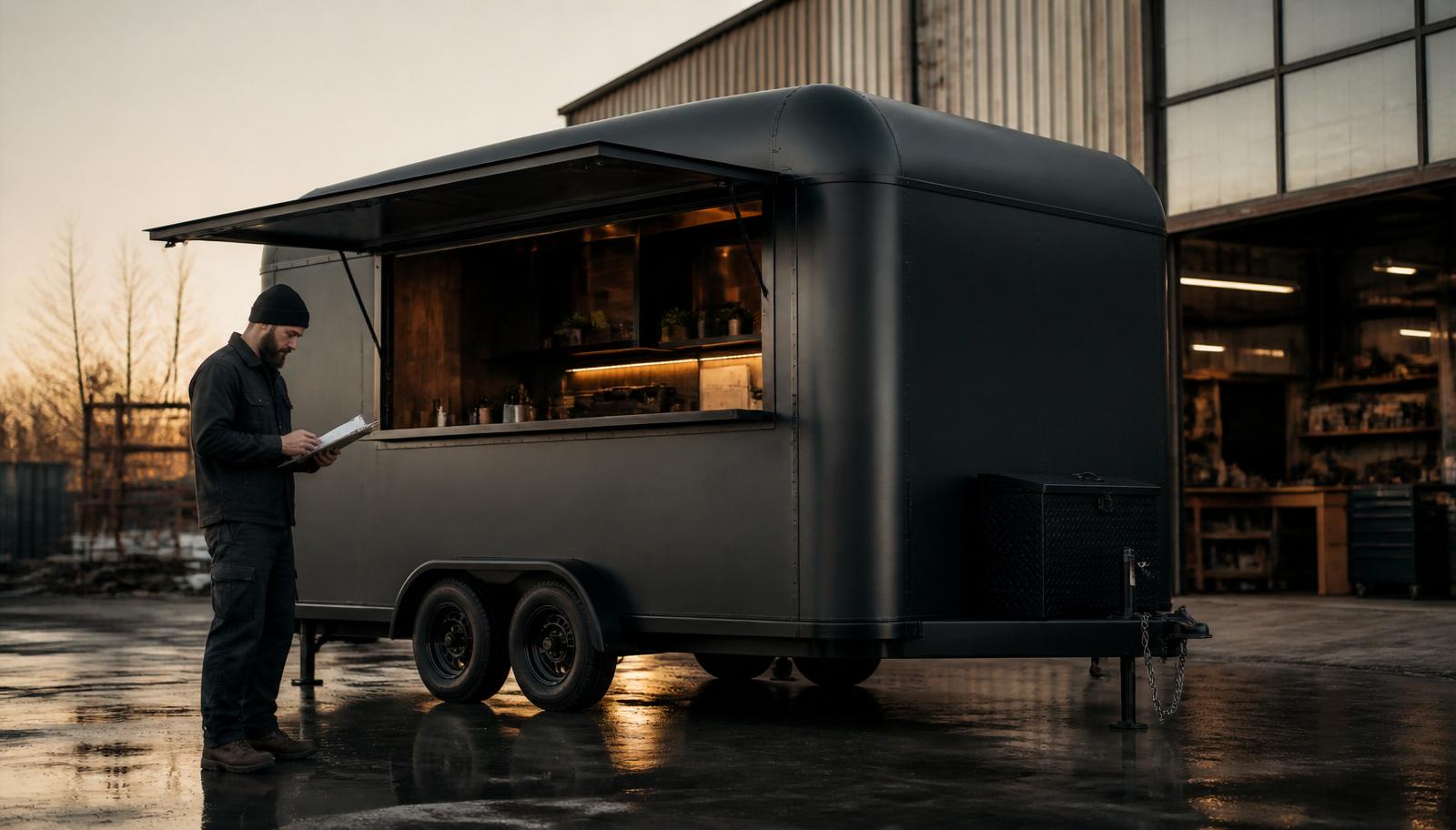
A practical roadmap from first idea to first sale — built around demand, cash flow, permits, mobile workflow, and a launch calendar that does not depend on luck.
Starting a mobile business can be less financially rigid than opening a traditional storefront, but it is not a shortcut around planning. You are replacing one permanent location with a moving system of equipment, utilities, transportation, permissions, sites, schedules, and customer communication. That flexibility is valuable only when the system is designed deliberately.
The strongest mobile businesses do not begin with a trailer purchase. They begin with a customer, an offer, and a repeatable reason to move. A coffee operator may follow morning demand. A mobile bar may sell private-event packages. A boutique may rotate through markets and product drops. A barber may build appointments around employers, neighborhoods, and senior communities. A gaming or lounge concept may live almost entirely on advance bookings.
This guide puts those decisions in the right order so that the platform supports a working business rather than becoming an expensive project waiting for a market. If you are still weighing formats, start with why mobile beats brick-and-mortar and the Quitting Day playbook before returning here.
What Counts as a Mobile Business?
A mobile business sells products, services, entertainment, or hospitality from a vehicle, trailer, cart, temporary setup, or transportable workspace. The unit may move every day, remain at one recurring site for long periods, or travel only for appointments and events.
| Operating model | How revenue is created | Typical examples |
|---|---|---|
| Route-based | Follows a published schedule of recurring stops. | Coffee, food, grooming, repair, workplace services. |
| Appointment-based | Customers reserve a time; the operator travels to them or a planned site. | Barbering, wellness, pet services, consulting, specialty services. |
| Event-based | Booked for weddings, festivals, parties, corporate events, or activations. | Mobile bars, lounges, gaming, retail pop-ups, catering. |
| Destination-based | Operates at one strong site while keeping the ability to relocate. | Coffee, retail, food, showrooms, seasonal venues. |
| Hybrid | Recurring stops create dependable volume; events or appointments add higher-value revenue. | Most mature mobile concepts. |
Choose the primary model early. It controls schedule, platform size, storage, staffing, marketing, site permissions, pricing, and financial assumptions. A business that serves 80 small transactions in a morning rush needs a different layout and sales system than one that completes two premium bookings per week.
How to Start a Mobile Business in 12 Steps
1. Define the customer, problem, and offer
Do not start with "I want a coffee trailer" or "I want a mobile boutique." Start with who will buy, why they will buy from a mobile operator, what they will purchase, and what makes the offer easier or more valuable because it moves.
A useful one-sentence test: "We help [specific customer] get [specific result] at [specific place or occasion] through [specific offer]." If that sentence is vague, the build will be vague too.
2. Validate demand before you buy or build
Market research is more useful when it produces behavior rather than compliments. Friends saying they love the idea is not validation. A venue introducing you to its event manager, a company discussing a recurring stop, a customer joining a paid pilot, or an organizer accepting a deposit is evidence.
Interview 15 to 25 people who resemble the intended customer. Visit locations, events, and competitors that would shape the business, and count traffic at the hours you expect to operate. Test the offer through a borrowed booth, temporary pop-up, catering setup, rented equipment, delivery service, or preorder campaign when legally appropriate. Measure inquiries, deposits, conversion, average order value, service time, repeat interest, and the objections that stop a purchase.
3. Design a focused minimum viable offer
A mobile workspace rewards focus. Every additional product, service, appliance, chair, screen, fitting area, or inventory category consumes space, weight, power, water, setup time, and cash. Launch with the offer that proves the business — not every offer the business may someday provide.
For a transaction business, limit the opening menu or assortment to the items that create the best mix of demand, speed, margin, and operational simplicity. For an appointment or event business, define two or three bookable packages with clear duration, capacity, inclusions, travel rules, and deposits. Customers should be able to understand the purchase before they contact you.
4. Map licenses, permits, and operating rules before final design
Mobile does not mean exempt. Requirements vary by activity and location, and a mobile operator may cross several jurisdictions where approval in one city or county may not authorize operation in another.
| Area to confirm | Possible requirements | Why it affects the build or launch |
|---|---|---|
| Business and tax | Entity registration, assumed name, federal or state tax IDs, sales-tax registration, local business license. | Determines who contracts, collects tax, opens accounts, and applies for other approvals. |
| Location and vending | Zoning, parking, mobile-vendor authorization, private-property permission, route or site restrictions. | Controls where and when the business can operate. |
| Food and beverage | Plan review, health permit, food-safety certification, commissary or base, sinks, water, waste, refrigeration. | May dictate plumbing, surfaces, equipment, tank capacity, and operating procedures. |
| Alcohol | State and local alcohol rules, caterer or host arrangements, event approvals, liquor liability. | The service model may depend on who purchases, owns, transports, and serves the alcohol. |
| Professional service | Individual and establishment licenses, sanitation, privacy, accessibility, records, or supervision. | Can shape layout, water, ventilation, equipment, and appointment rules. |
| Fire and life safety | Fire inspection, suppression, extinguishers, propane, generator placement, egress, electrical review. | Changes equipment selection, clearances, ventilation, storage, and inspection timing. |
| Vehicle and event | Registration, commercial use, towing, parking, venue vendor rules, certificates of insurance. | Affects transport, access, weight, coverage, and which events will accept the unit. |
Create a written compliance map for every city, county, state, and venue type you expect to use. Ask each authority which plans it wants to review and whether that review must happen before construction. Record the contact, date, answer, application, fee, renewal, and inspection sequence. Verbal reassurance is not the same as an approval.
5. Build an all-in startup budget and monthly cash-flow model
The trailer or vehicle is only one part of the startup cost. Separate one-time uses of cash from recurring monthly expenses, then add a working-capital reserve for the period before sales become dependable.
| Budget category | Include | Commonly missed |
|---|---|---|
| Platform and build | Trailer or vehicle, fabrication, utilities, delivery, graphics, installation. | Freight, design changes, inspection revisions, taxes, registration. |
| Equipment and opening inventory | Core equipment, point of sale, smallwares, tools, initial stock, uniforms. | Filtration, cables, mounts, spare parts, cases, cleaning supplies. |
| Transportation and base | Tow vehicle or commercial vehicle needs, hitch or brake equipment, storage, charging, commissary or service base. | Weight-distribution changes, secure parking, water or waste service. |
| Compliance and professional | Registration, permits, inspections, insurance, accounting, legal review. | Multiple jurisdictions, event certificates, renewals, deposits. |
| Launch and sales | Brand identity, website, photography, signs, menus, booking tools, initial promotion. | Event deposits, samples, merchant hardware, content production. |
| Working capital | Owner pay, payroll, inventory, loan payments, fuel, site fees, maintenance, marketing. | Weather cancellations, slow permits, repairs, seasonality, payment delays. |
Do not call the project funded merely because the platform can be purchased. The business also needs enough cash to become operational and survive a slower-than-planned ramp. Model a base case, a conservative case, and a disruption case in which the opening moves, a major booking cancels, or core equipment is unavailable.
Use contribution margin to find the real break-even point
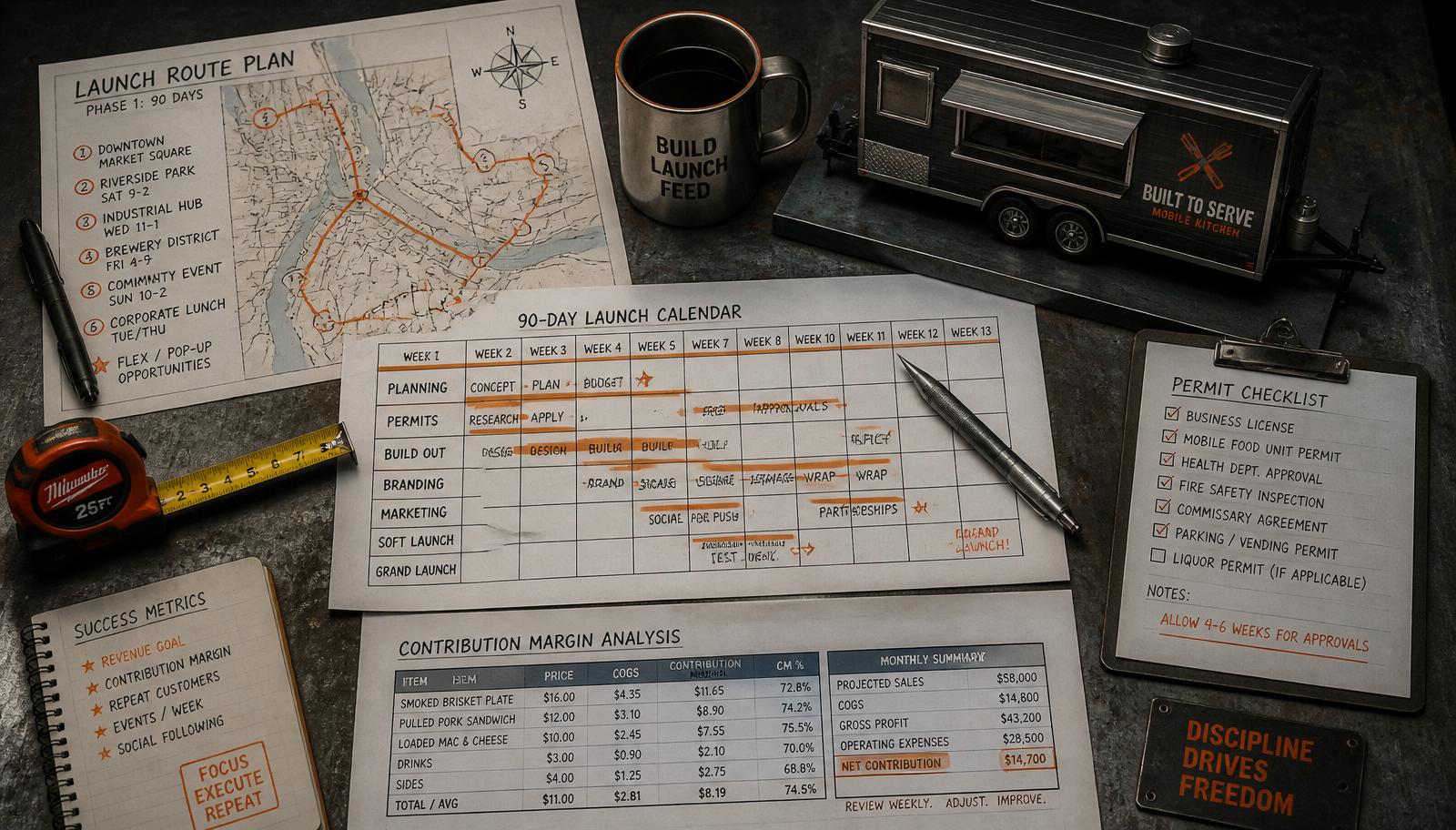
Revenue does not pay fixed costs dollar for dollar because every sale may carry product, card, labor, event, or fulfillment costs. The basic break-even formula is fixed costs divided by the sales price minus variable cost per unit.
| Illustrative input | Transaction-based model | Booking-based model |
|---|---|---|
| Average sale or booking | $10.00 | $1,250 |
| Direct variable cost | $3.50 | $350 |
| Contribution per sale | $6.50 | $900 |
| Monthly fixed costs (incl. owner-pay target) | $9,750 | $8,100 |
| Illustrative break-even volume | 1,500 transactions / month | 9 bookings / month |
| Operating translation | ≈ 68 transactions per day over 22 days | ≈ 2–3 bookings per week |
Replace every input with your actual pricing, direct costs, payment fees, payroll assumptions, debt service, owner-pay target, and operating calendar. Break-even should include the cost of keeping the owner in business — not merely keeping the lights on. For a worked example on one concept, see the real cost of a mobile coffee trailer.
6. Choose a funding plan that protects operating cash
Funding should match the job. Long-lived equipment may be financed differently from opening inventory, permits, marketing, or emergency cash. Compare the total repayment, required down payment, collateral, personal guarantee, fees, prepayment terms, and the effect of the monthly payment on break-even — not only whether the application is approved.
Owner cash can reduce debt but should not consume the entire emergency reserve. Equipment financing or leasing may align payments with useful life. Bank, credit-union, SBA-backed, microloan, or community-development options may require stronger documentation and more lead time. Presales, memberships, event deposits, or customer contracts can validate demand and contribute to launch cash when structured honestly. A line of credit can help with timing, but should not disguise a business that loses money on normal operations.
Prepare a lender-ready package before shopping for money: business plan, startup budget, sources and uses of funds, owner contribution, monthly projections, personal financial information, quotes, relevant experience, and evidence of customer demand. The strongest financing request explains how the payment will be supported.
7. Form the business and separate its money
Choose the legal and tax structure with qualified advice — the decision affects liability, registration, taxes, ownership, and future growth. Check the business name at the state level and assess domain, social, and trademark conflicts before investing heavily in branding.
Register the entity or assumed business name as required. Apply directly through the IRS for an EIN when needed (the IRS does not charge for an EIN). Open a dedicated business bank account before accepting or spending business money. Create bookkeeping categories that match the budget and operating model. Set aside sales tax, payroll obligations, and estimated taxes instead of treating the balance as spendable cash. Use written contracts for partners, venues, contractors, employees, bookings, cancellations, and deposits.
A separate account and disciplined records make the business easier to manage, finance, insure, and eventually sell. They also make it much harder to confuse sales with profit.
8. Choose the mobile platform around the actual work
A platform should be selected after the offer, capacity, rules, utilities, and route are understood. The best choice is not automatically the largest unit or the least expensive used trailer. It is the smallest dependable platform that can execute the busiest period safely and comfortably while carrying the required payload.
For a trailer, calculate loaded weight — not empty shell weight. Include installed equipment, batteries, generator, propane, fresh and gray water, inventory, tools, signage, supplies, and personal cargo. Confirm the trailer's GVWR and axle ratings, the tow vehicle's tow rating and payload, hitch and tongue-weight limits, brake-controller requirements, connector, mirrors, tires, and local registration rules. Use manufacturer ratings and qualified professionals — not assumptions.
9. Design workflow, utilities, and service capacity before aesthetics
The exterior attracts attention; the operating layout determines whether the business can serve customers profitably. Diagram the busiest 15 minutes of the day. Place every worker, customer interaction, tool, product, trash stream, cleaning step, and replenishment movement on the plan.
Model throughput at peak. Confirm staff movement without blocking doors, equipment, storage, or one another. List running and starting power loads, voltage, shore-power availability, generator or battery capacity, and backup procedure. Estimate real daily water and waste consumption, handwashing, cleaning, tank capacity, heating, fill, drain, winterization, and legal disposal. Protect people, products, pipes, electronics, and service speed in the temperatures where the unit will operate. Preserve egress, ventilation, clearances, service access, fire protection, secure storage, and the ability to replace equipment. Plan ordering, waiting, payment, pickup, appointment entry, accessibility, lighting, sound, and signage.
Run a tabletop simulation before the layout is locked, then a physical mock workflow with taped floor positions or temporary counters. A ten-second delay repeated 80 times is more important than a decorative feature that photographs well.
10. Secure insurance, suppliers, systems, and a maintenance plan
Business insurance protects against costs the operating budget cannot absorb. The appropriate package may include general liability, product or professional liability, commercial vehicle or hired/non-owned auto considerations, trailer or inland-marine coverage, equipment and inventory, workers' compensation, liquor liability, cyber or payment exposure, and business interruption. Coverage depends on the concept and jurisdiction.
At the same time, establish the systems that make a field operation repeatable: suppliers and alternates, reorder points, point of sale, booking and deposit collection, contracts, payroll, opening and closing checklists, sanitation, incident reporting, data backup, key control, roadside assistance, preventive maintenance, and a plan for the day the primary piece of equipment fails.
11. Build the first 90 days of locations and bookings
A mobile business should not open with an empty calendar. Use the build and approval period to convert market research into operating commitments. Pursue a balanced mix of recurring anchors and higher-value opportunities.
Recurring anchors include employers, campuses, apartment communities, breweries, private properties, neighborhoods, or standing appointment blocks. Advance bookings include weddings, parties, corporate events, school functions, festivals, launches, markets, or private services. Backup opportunities include indoor venues, alternate sites, seasonal partners, reschedule policies, and weather-safe work. Every relationship needs written terms: access time, utilities, site fee or revenue share, exclusivity, insurance, cancellation, cleanup, waste, and who promotes the appearance.
Score every location or event using the same measures: total sales, contribution dollars, labor hours, travel, setup, site fee, new-customer value, repeat potential, weather exposure, and operational difficulty. A busy event can still be a weak stop after fees and labor.
12. Market before launch, soft-open, and improve from real data
Build the brand and sales path while the unit is being produced. At minimum, customers need to understand what you do, where or how to book, what it costs, and what action to take. Create the website, inquiry or booking form, service area, route calendar, social profiles, email list, photography plan, menu or packages, and launch partnerships before opening day.
Soft-open with controlled volume. Invite a limited group, operate the full workflow, and measure service time, power and water use, inventory, customer questions, payment reliability, setup, cleanup, temperature, noise, and every moment where staff improvise. Fix those points before a large public launch.
After launch, track a compact scorecard: sales, contribution margin, average ticket or booking, transactions or bookings, labor percentage, sales per operating hour, repeat customers, lead conversion, revenue by location, cancellations, downtime, and cash reserve. Mobility gives you the ability to change the calendar. The numbers tell you where to move it.
A Practical Mobile Business Launch Sequence
| Phase | Primary work | Evidence required before moving forward |
|---|---|---|
| 1. Concept | Customer, problem, offer, revenue model, mobile advantage. | A clear one-sentence concept and a focused opening offer. |
| 2. Validation | Interviews, competitor visits, traffic checks, pilot, partner conversations. | Behavioral evidence: deposits, bookings, qualified leads, site interest, or paid tests. |
| 3. Feasibility | Regulatory map, startup budget, break-even, route, platform and utility requirements. | Written requirements, real quotes, and a conservative cash plan. |
| 4. Commitment | Entity, banking, insurance path, financing, contracts, platform configuration. | Funding sources identified and configuration tied to the operating model. |
| 5. Prelaunch | Permits, build, suppliers, booking calendar, website, SOPs, hiring and training. | Launch inventory, approvals, systems, and scheduled demand. |
| 6. Soft launch | Controlled service, workflow test, issue log, equipment and utility verification. | Safe repeatable operation at target quality and service time. |
| 7. Scale | Improve routes, packages, pricing, utilization, staffing, and maintenance. | Positive contribution, stable demand, documented systems, and protected cash. |
Common Mobile Business Startup Mistakes
Buying the platform before proving the offer
A trailer cannot repair weak demand. Validate the customer, price, channel, and operating locations before committing to a final configuration.
Treating permits as paperwork for later
Health, fire, alcohol, professional, vending, zoning, vehicle, and event requirements can change equipment and layout. Discovering that after construction is expensive.
Budgeting for the build but not the ramp
Opening inventory, permits, insurance, deposits, marketing, fuel, payroll, repairs, and owner living costs do not disappear because the platform is complete.
Designing for appearance instead of throughput
A beautiful unit that creates staff collisions, long service times, poor climate control, inaccessible equipment, or constant restocking will lose the advantage it was built to create.
Assuming the trailer can go anywhere
Mobility is constrained by local rules, venue access, parking, ground conditions, utilities, insurance, weight, and customer communication. Every destination still needs a plan.
Launching without recurring demand
Driving around looking for customers is not a route strategy. Build anchor stops, deposits, events, appointments, and partner promotions before opening.
Calling owner labor free
A business that pays every expense except the owner has not reached a sustainable break-even point. Include an owner-pay target in the model.
Which Mobile Concepts Fit a Purpose-Built Trailer?
| Concept | Primary revenue channels | Design questions to answer |
|---|---|---|
| Coffee and espresso | Recurring routes, destination stops, employers, campuses, events, catering. | Rush throughput, espresso load, water, refrigeration, service window, climate. |
| Bar and beverage | Weddings, private events, festivals, corporate and branded activations. | Alcohol model, refrigeration, glassware, water, inventory, host and venue rules. |
| Retail and boutique | Markets, neighborhoods, festivals, fittings, product launches, online pop-ups. | Merchandising, inventory, fitting space, security, climate, checkout flow. |
| Barber and personal service | Appointments, employers, neighborhoods, events, communities and memberships. | Licensing, chair position, sanitation, water, privacy, accessibility, scheduling. |
| Digital entertainment | Parties, schools, festivals, corporate events, sim racing, karaoke, and rentals. | Power, networking, cooling, screens, sound, equipment protection, guest flow. |
| Lounge and hospitality | Weddings, VIP areas, green rooms, festivals, brand events, and private rentals. | Capacity, climate, seating, cleaning, venue access, premium presentation. |
| Custom concept | Training, showroom, wellness, pet service, education, demonstrations, or hybrid uses. | Begin with the work sequence, governing rules, utilities, payload, and customer experience. |
Venture Works builds purpose-built platforms for each of these categories — see the full lineup and specs at our mobile business configurations. THE MORNING RUSH is configured for coffee and espresso. THE TAPHOUSE supports beverage service and events. THE OUTFITTER creates a traveling retail environment. THE PARLOR brings a professional barbershop or personal-service workspace to the customer. THE DIGITAL ARENA and THE SOCIAL CLUB support bookable entertainment and hospitality. THE CUSTOM FIT begins with the business when the concept does not belong in a standard category.
The planning conversation starts with what you will sell, where the business will earn, how the busiest operating period must work, which rules shape the build, and what systems the unit must support.
Final Takeaway
The goal is not simply to start a business on wheels. It is to build a business that earns because it can move: toward morning demand, booked events, underserved neighborhoods, workplaces, appointments, seasonal opportunities, and the customers most likely to buy.
Start with proof. Confirm the rules. Build the cash model. Design the platform around the busiest real workflow. Use the production and approval window to fill the calendar. Then open small enough to learn, track the numbers honestly, and move toward what works. When the customer, offer, route, numbers, and operating requirements are clear, the trailer stops being the dream by itself — it becomes the tool that makes the dream workable.
Frequently Asked Questions
Common Questions
- How much does it cost to start a mobile business?
- The total depends on the concept, platform, equipment, tow or transport needs, utilities, permits, insurance, branding, opening inventory, and working capital. Build an all-in sources-and-uses budget rather than using the trailer price as the startup total.
- What licenses do I need for a mobile business?
- Requirements vary by activity and place. Common categories include business registration, tax accounts, local business or vendor licenses, zoning and parking, health and fire approvals, professional licenses, vehicle requirements, event permissions, and alcohol rules. Confirm every intended jurisdiction before final design.
- Can I test a mobile business before buying a trailer?
- Often, yes. Depending on the activity and local rules, you may be able to use a legal pop-up, booth, rented equipment, temporary catering setup, delivery model, appointment pilot, preorder campaign, or partner event to test demand before committing to a full platform.
- Do I need an LLC to start a mobile business?
- Not every business is required to form an LLC, and an LLC is not automatically the best legal or tax structure. The right choice depends on ownership, liability, taxes, employees, financing, and future plans. Consult qualified legal and tax professionals for your situation.
- Are mobile businesses profitable?
- They can be, but mobility alone does not create profit. The key drivers are contribution margin, route or booking quality, utilization, pricing, labor, debt, event and location fees, downtime, seasonality, and owner pay. Track contribution by location and channel instead of looking only at revenue.
- Do I need a tow vehicle for a mobile business trailer?
- Yes, unless transport is contracted to a qualified provider. The tow vehicle, hitch, payload, tongue-weight capacity, brakes, wiring, tires, mirrors, and ratings must be compatible with the trailer at its real loaded weight — not merely its empty weight.
- How long does it take to start a mobile business?
- Timing depends on concept validation, financing, design, platform availability, permits, equipment, inspections, and bookings. Some service concepts can test quickly; a purpose-built and regulated operation takes longer. Build the schedule backward from approvals and opening readiness rather than choosing a launch date first.
- Can a mobile business operate in multiple cities or states?
- Potentially, but permissions may not transfer. Business, vending, health, fire, alcohol, professional, tax, vehicle, and event requirements can change across jurisdictions. Research every planned operating area and keep approvals and insurance documentation organized.
- What is the best mobile business to start?
- The best fit combines proven demand, an attractive contribution margin, a compact repeatable workflow, manageable regulation, and a clear reason to travel to customers. Coffee, beverage, retail, personal service, gaming, hospitality, pet service, training, wellness, and showroom concepts can all work when the local model is sound.